Best Espresso Machines
The 2026 Guide · Home Espresso Machines

Stop paying $6 a cup for something you can make better.

A good home machine pays for itself in months — but the category is a minefield of inflated pressure claims and near-identical listings. We compared 32 machines on the specs that actually change what lands in your cup: the grinder, the heat, the steam wand and the size of the thing on your counter.

By Ilane Tall8 picks · 32 machines comparedResearch-based — no testing lab, no invented ratings

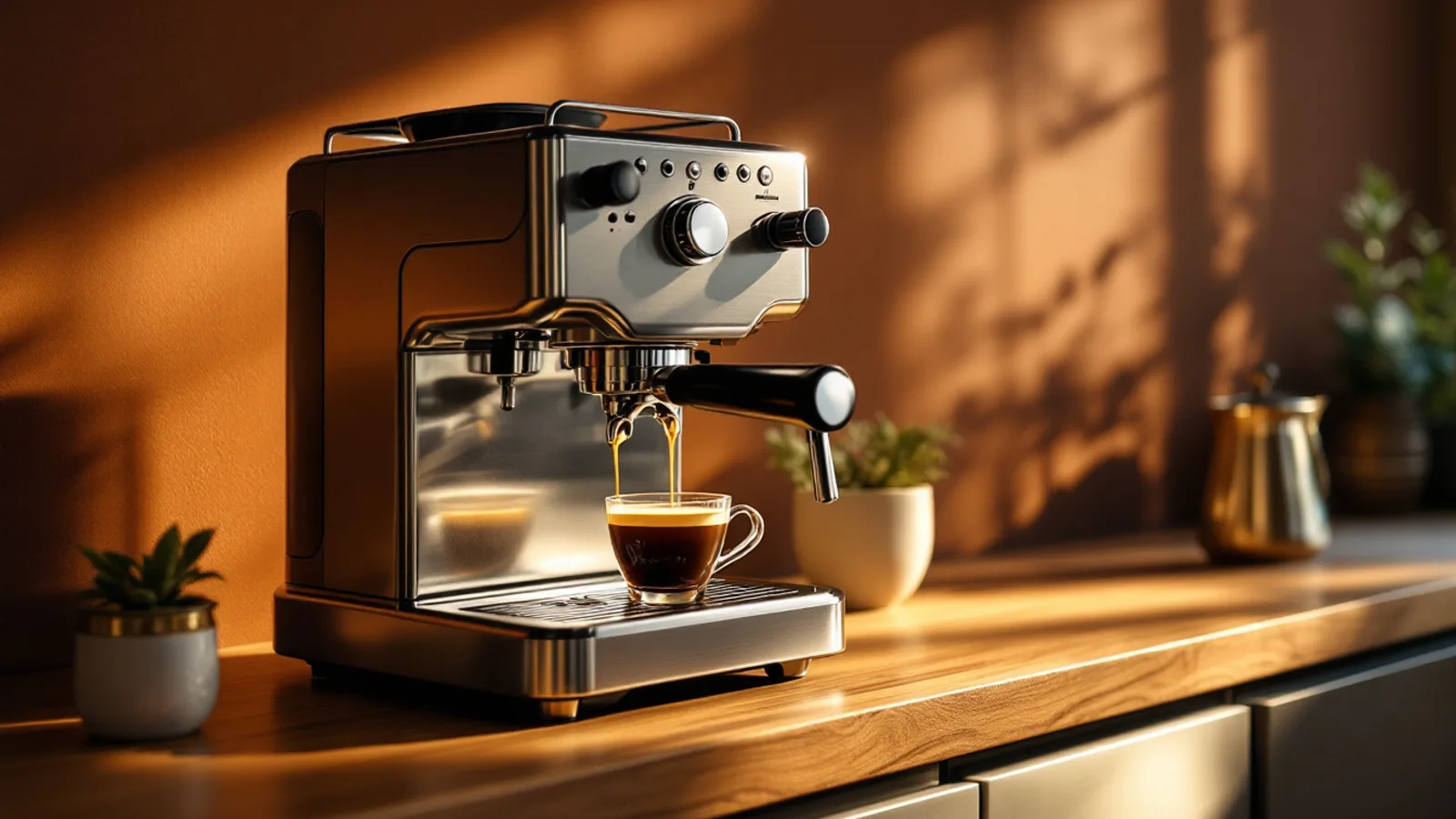
Stainless steel home espresso machine on a warm walnut kitchen counter pulling a shot into a cup
The one to buy

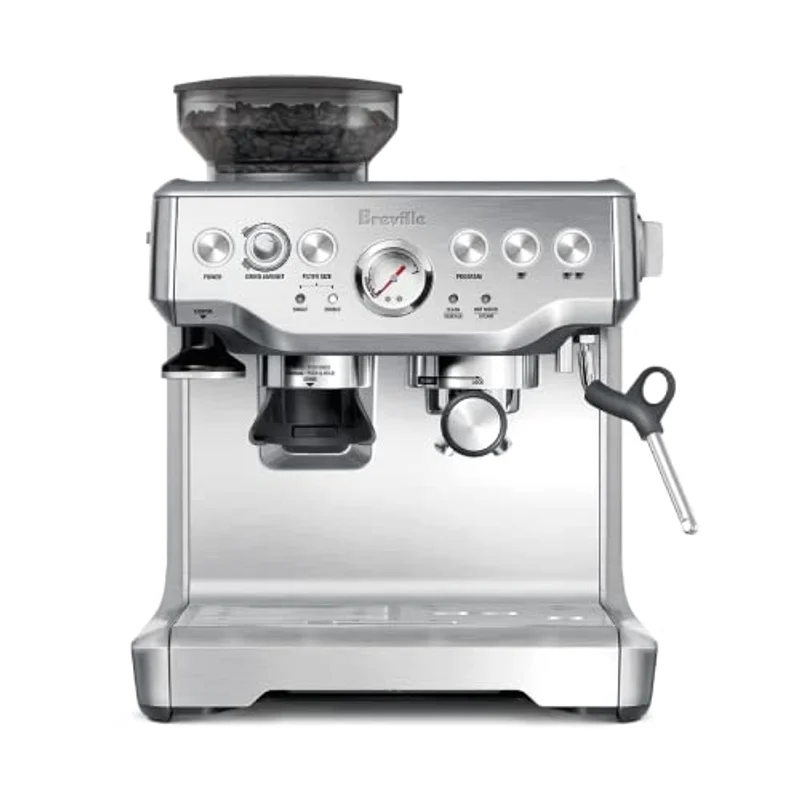
Breville Barista Express

The machine that turns a curious buyer into someone who actually makes espresso every morning. A conical burr grinder is built in, so you grind fresh into the portafilter and adjust dose and grind without buying a second appliance — the single biggest jump in cup quality you can make.

Built-in burr grinder·54 mm portafilter·67 oz tank·1,600 W
Check price on Amazon
Breville Barista Express espresso machine in brushed stainless steel
Typical price
$685

Grinder included. Buying a comparable machine plus a decent burr grinder separately usually costs more.

Grind, dose, tamp, pull.
— everything happens on one footprint

Before you buy

Four things that decide whether you'll love it

01

The grinder

Fresh, correctly-sized grounds matter more than the machine. Either buy one with a burr grinder built in, or budget separately for a burr grinder — never a blade one.

02

Bars are marketing

Espresso is brewed at roughly 9 bar. A "20 bar" pump means the pump's maximum, not the pressure at the coffee. Above 9 bar it changes nothing you can taste.

03

How you take milk

Flat whites and lattes live and die on steam. A manual wand gives you control and latte art; an automatic frother gives you a walk-away routine. Pick the one you'll actually use at 7am.

04

Counter and cabinet

Measure height with the lid open and the water tank out — bean-to-cup machines are tall. Also check the tank size if more than one person drinks coffee.

Why there are no star ratings on this page

Most roundups decorate every product with a rating. We won't, because we can't verify one: Amazon's product API no longer returns rating or review-count data for these machines, and inventing a number — or copying one that may be months stale — would make this page look more authoritative than it deserves to be.

So this guide is built on what is verifiable: published specifications, what's physically in the box, machine type, footprint and live price. Where we say something is a trade-off, it comes from the spec sheet, not from a score we made up.

At a glance

How the eight compare

Ordered by our recommendation. Prices move constantly on Amazon — confirm the live price before you buy.

MachineBest forTypeGrinderMilkPrice
Breville Barista ExpressBest overallSemi-autoBuilt-in burrManual wand$684.96Price
Breville BambinoBest for milk drinksSemi-autoNoneAuto microfoam$299.95Price
AMZCHEF with GrinderBest value bean-to-cupSemi-autoBuilt-in, 44 settingsManual wand$199.99Price
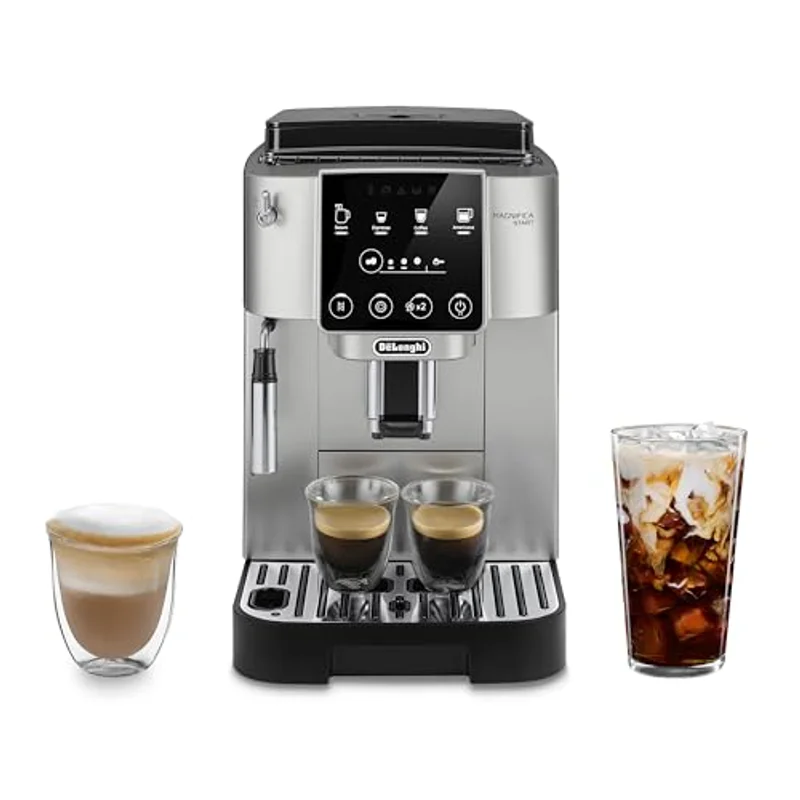
De'Longhi Magnifica StartBest one-touchSuper-autoBuilt-in, 13 settingsManual frother$649.95Price
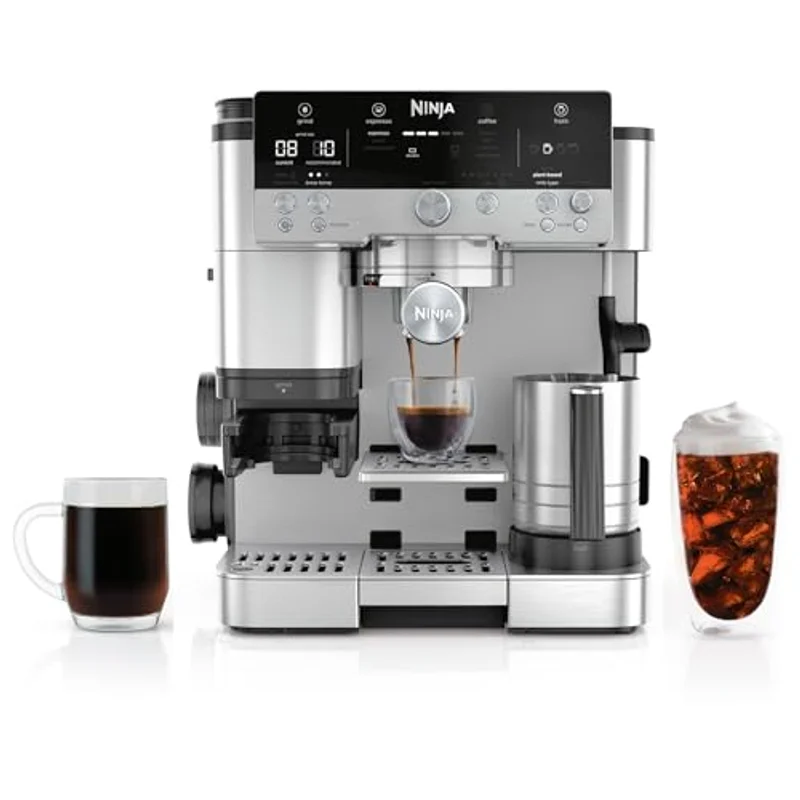
Ninja Luxe Café PremierBest all-rounder3-in-1Built-in burrDual auto froth$599.00Price
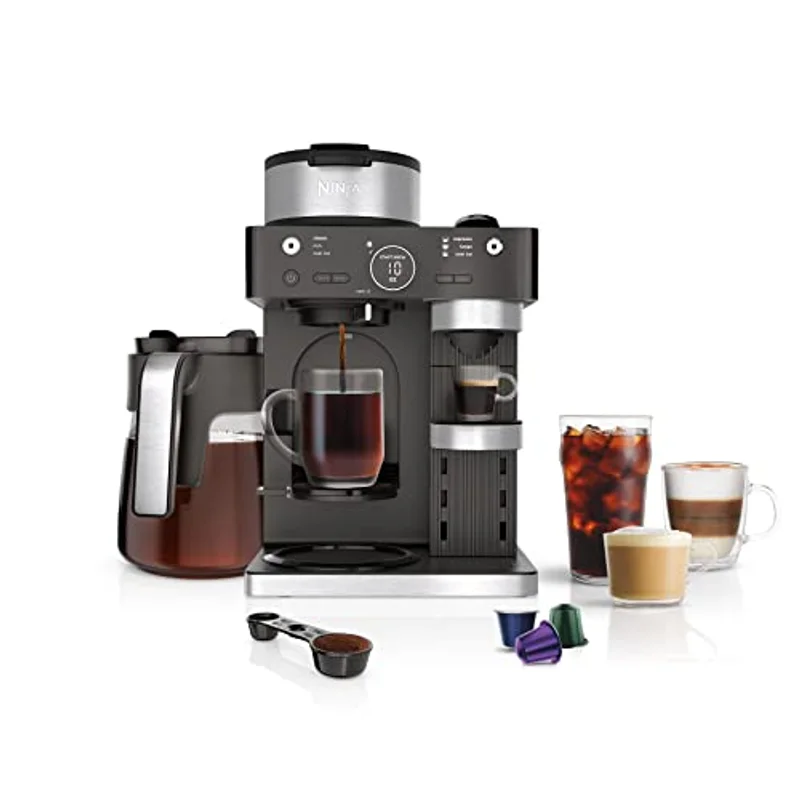
Ninja CFN601Best capsule + coffeeCapsuleNoneFold-away frother$279.95Price
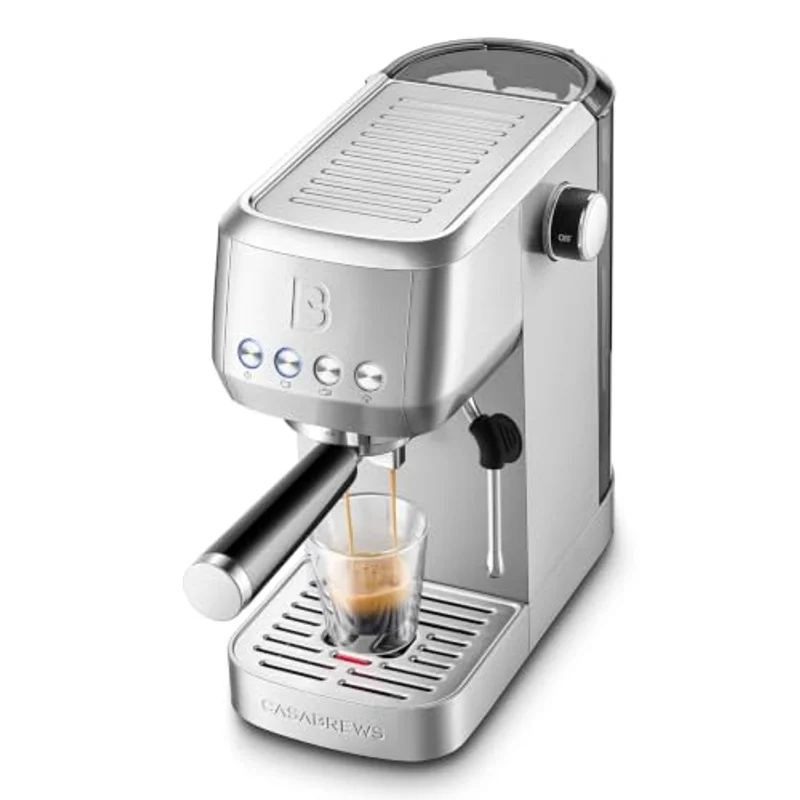
CASABREWS 3700Best under $100Semi-autoNoneManual wand$99.99Price
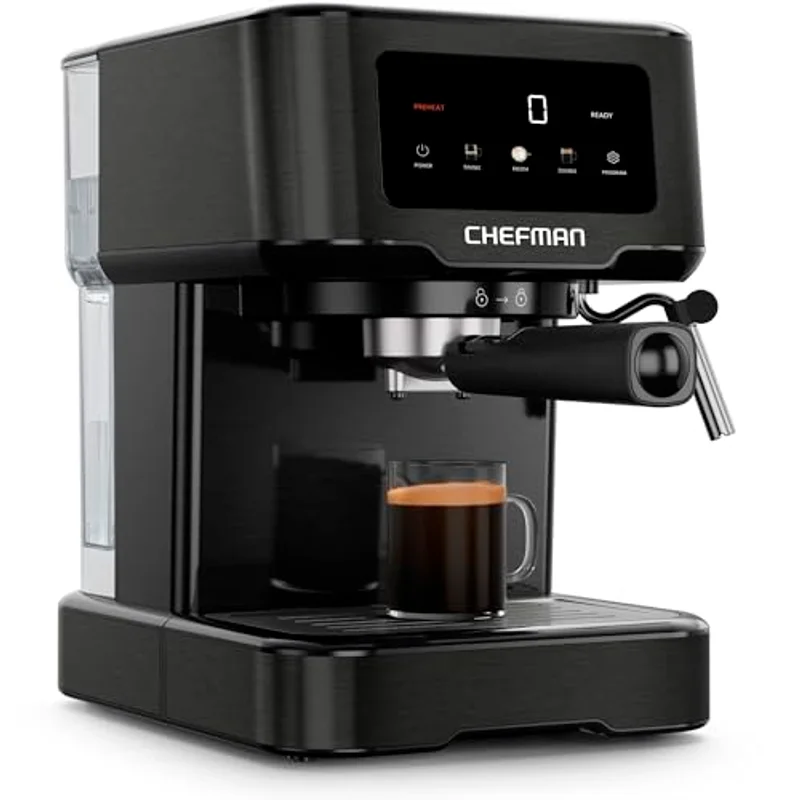
Chefman CraftBrewCheapest worth buyingSemi-autoNoneManual wand$79.99Price
The picks

Our eight, and who each is for

01Best overall

Breville BES870XL Barista Express

For the person who wants to learn espresso properly
Semi-automatic · built-in conical burr grinder · 54 mm portafilter · 67 oz tank · 1,600 W

This is the machine that has anchored the "first real espresso machine" recommendation for over a decade, and the reason is the integration: dose-control grinding straight into the portafilter, low-pressure pre-infusion to start the extraction gently, a manual steam wand for microfoam, and a razor trimming tool so your dose is repeatable. You get a grinder, a tamper, a milk jug and two sets of baskets in the box — buy the pieces separately and you'll usually spend more.

The trade-offIt is big, it is heavy, and it asks something of you. If you want coffee at the push of one button and no learning curve, buy the De'Longhi below instead — this machine rewards a few weeks of dialling in.

$685
Grinder includedCheck price →
02Best for milk

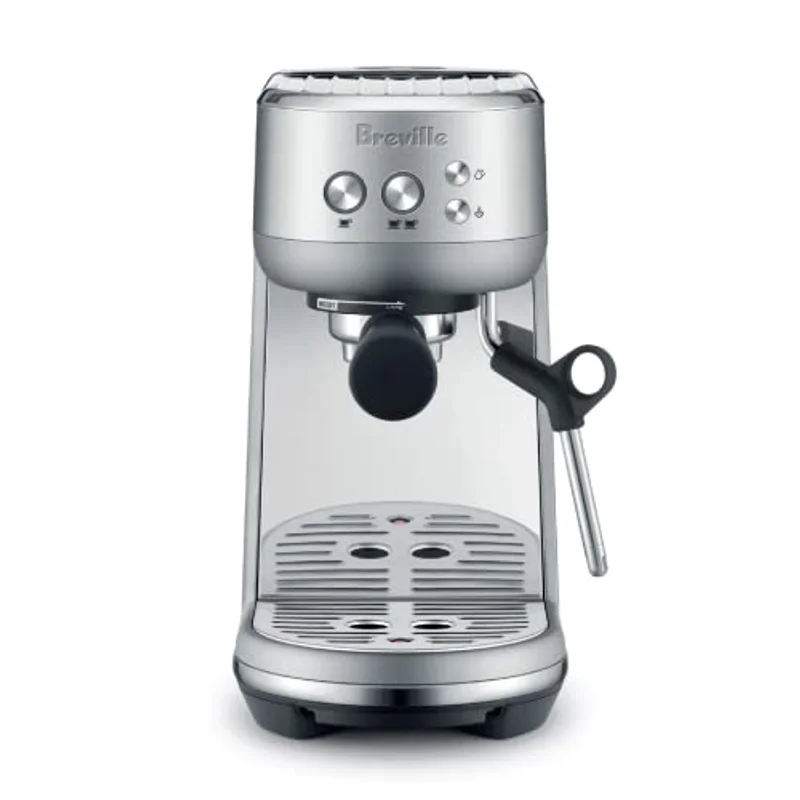
Breville BES450BSS Bambino

Lattes and flat whites, in a tiny footprint
Semi-automatic · no grinder · automatic microfoam steam wand · compact

The Bambino strips the Barista Express down to the two things that matter for milk drinks: fast heat-up and a steam wand that textures milk to a set temperature automatically. Because it's narrow it fits where a bean-to-cup machine can't, and because the frothing is automated you can pour a genuinely good flat white on a weekday morning without practising latte art first.

The trade-offThere's no grinder, so factor in a separate burr grinder — pre-ground supermarket coffee will waste what this machine can do.

$300
Auto microfoamCheck price →
03Best value

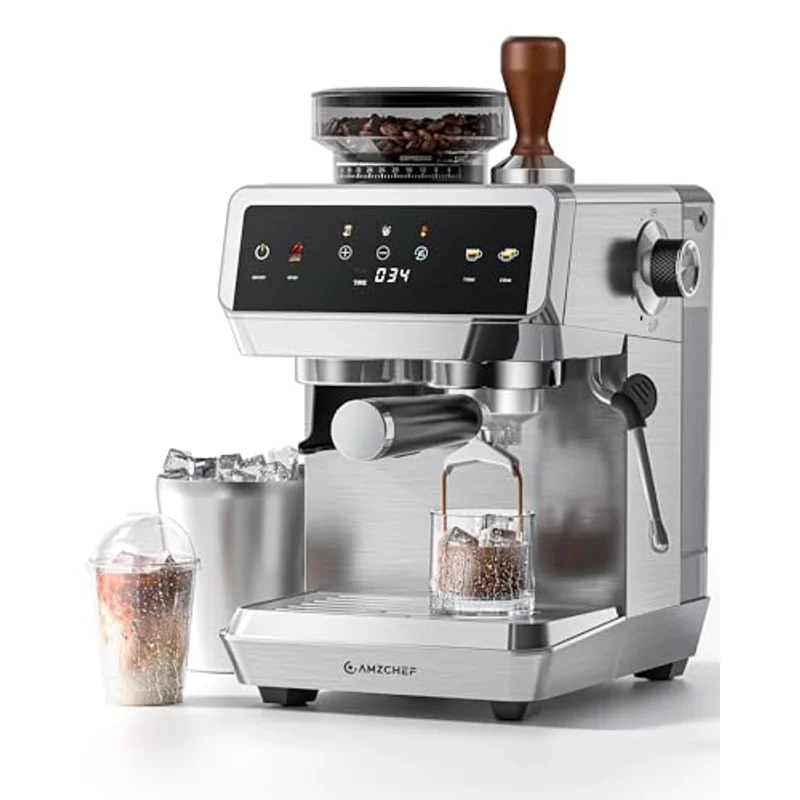
AMZCHEF Espresso Machine with Grinder

Bean-to-cup for a third of the Breville price
Semi-automatic · built-in grinder, 44 settings · 190–201°F temperature control · 60 oz tank · cold brew mode

On paper this is the most machine per dollar in the guide: a burr grinder with 44 settings, brew-temperature control across an 11-degree range, a 60 oz tank and a steam wand, at about $200. Adjustable brew temperature is genuinely useful — lighter roasts extract better hotter — and it's a spec you normally pay several hundred more for.

The trade-offIt's a newer listing from a smaller brand, so long-term reliability and parts availability are unproven compared with Breville or De'Longhi. That's the real premium you pay at the top of this list.

$200
Grinder · temp controlCheck price →
04Best one-touch

De'Longhi Magnifica Start

Push one button, walk away with espresso
Super-automatic · conical burr grinder, 13 settings · 3 one-touch recipes · manual milk frother

A super-automatic grinds, doses, tamps and brews on its own — espresso, coffee or an americano from a single press, with adjustable strength. If the goal is a very good cup with zero technique and zero mess on a weekday, this is the category to buy, and De'Longhi is the most established name in it.

The trade-offYou give up control: no portafilter, no tamping, and less headroom for chasing a perfect shot. The milk frother on this model is manual, so milk drinks still need a hand.

$650
Super-automaticCheck price →
05Best all-rounder

Ninja Luxe Café Premier 3-in-1

Households that drink espresso, drip and cold brew
3-in-1 · built-in burr grinder · espresso, drip, cold brew · dual automatic froth system

One appliance instead of three: two espresso styles, three drip styles in seven sizes, and two cold-brew modes, all fed by a built-in grinder. The frothing system pairs a spinning whisk with an automatic steamer and handles cold foam as well as hot microfoam, which is the part most multi-machines get wrong.

The trade-offBreadth over depth — a dedicated semi-automatic at this price gives a more serious espresso ceiling. Also a large machine: measure your counter before ordering.

$599
Espresso · drip · cold brewCheck price →
06Best capsule

Ninja CFN601 Espresso & Coffee Maker

Nespresso convenience without giving up a full pot of coffee
Capsule · Nespresso original-capsule compatible · 19-bar system · 12-cup coffee side · fold-away frother

Two machines in one body: a capsule espresso side that pulls espresso, lungo or over-ice, and a full 12-cup drip coffee side for everyone else in the house. The frother folds away when you don't need it. For a household split between "I want a quick espresso" and "I want a mug of filter coffee", this settles the argument.

The trade-offCapsules mean an ongoing cost and no control over grind or dose — the ceiling is set by the capsule, not by you. Cheapest to buy, most expensive per cup over years.

$280
Capsule + dripCheck price →
07Under $100

CASABREWS 3700 Essential

The lowest-risk way to find out if you'll stick with it
Semi-automatic · no grinder · 1,350 W boiler · steam wand · 12.6 × 5.7 × 12.2 in

Under $100, in stainless, with a real portafilter and a real steam wand — and only 5.7 inches wide, which is why it keeps ending up in small kitchens and offices. Pair it with a $40 hand grinder and you have a legitimate espresso setup for less than the price of one of the machines above.

The trade-offSmall boiler, so back-to-back milk drinks mean waiting, and the advertised 20 bar is pump maximum rather than brew pressure. Fine for one or two cups a day.

$100
CompactCheck price →
08Cheapest

Chefman CraftBrew

The floor price for a pump machine worth owning
Semi-automatic · 15-bar pump · 1.5 L removable reservoir · digital shot-volume control · steam wand

At around $80 this is where we'd draw the line: it has a real pump, two shot baskets, a steam wand, and a touch panel that lets you programme shot volume — so you can pull a ristretto or a lungo deliberately rather than by guessing. Below this price you land in steam-driven machines, which brew at a fraction of espresso pressure and produce something closer to strong coffee.

The trade-offNo grinder, a small footprint boiler, and plastic where the machines above use steel. Buy it as a starting point, not a forever machine.

$80
15-bar pumpCheck price →
How we picked

32 machines in, eight out

We started from every espresso machine in our database and sorted them by what they actually are rather than by marketing copy: pump machines versus steam-driven ones, grinder or no grinder, manual wand or automatic frother. We then kept one clear winner per buying situation — learning espresso, milk drinks, one-touch, multi-drink, capsule, tight budget — and dropped near-identical listings from unknown sellers, of which this category has dozens.

How we compared

Research, not a lab

We're honest about this: we don't physically test these machines and we don't run a testing lab. We compare published specifications, what ships in the box, machine class, footprint and live pricing, and we read manufacturer claims sceptically — the pressure numbers in this category are routinely misleading. We show no star ratings because we have no rating data we can verify, and we never invent scores.

Go deeper

Guides worth your time

How to choose, dial in, clean and actually enjoy the machine you buy. View all guides →

FAQ

Common questions

Do I really need a machine with a built-in grinder?

You need a burr grinder — whether it lives inside the machine or beside it. Espresso is unforgiving about grind size, and pre-ground coffee is both too coarse and too stale to extract well. A built-in grinder is the tidiest and usually the cheapest route; the alternative is a separate burr grinder, which costs roughly $80–200 but grinds better and lets you keep it when you upgrade the machine.

Is a 20-bar machine better than a 9-bar one?

No. Espresso is brewed at about 9 bar of pressure at the coffee puck, and machines advertised at 15 or 20 bar quote the pump's maximum instead. Every pump machine in this guide can reach brewing pressure; a higher number on the box tells you nothing about the cup. Judge the grinder, the boiler and the steam wand instead.

Semi-automatic or super-automatic?

Semi-automatic means you grind, dose, tamp and start the shot — more control, better ceiling, a learning curve of a few weeks. Super-automatic does all of it behind a single button — consistent, fast, far less mess, but a lower ceiling and pricier repairs. If making coffee sounds like a hobby, go semi-automatic; if it sounds like a chore, go super-automatic.

How quickly does a machine pay for itself?

It depends entirely on your café habit and your bean cost, so do the arithmetic with your own numbers: a $6 daily latte is roughly $180 a month, while a home latte from good beans and fresh milk usually lands under a dollar. On those assumptions a $300 machine is repaid inside a couple of months — but the honest version of the answer is that it only pays for itself if you keep using it after the novelty passes.