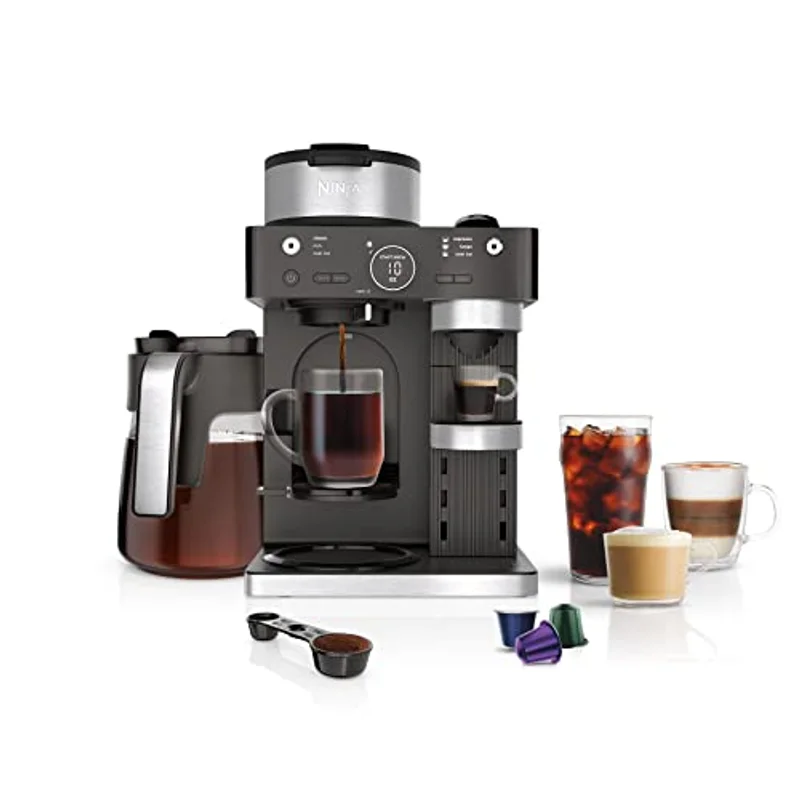
Breville BES870XL Barista Express
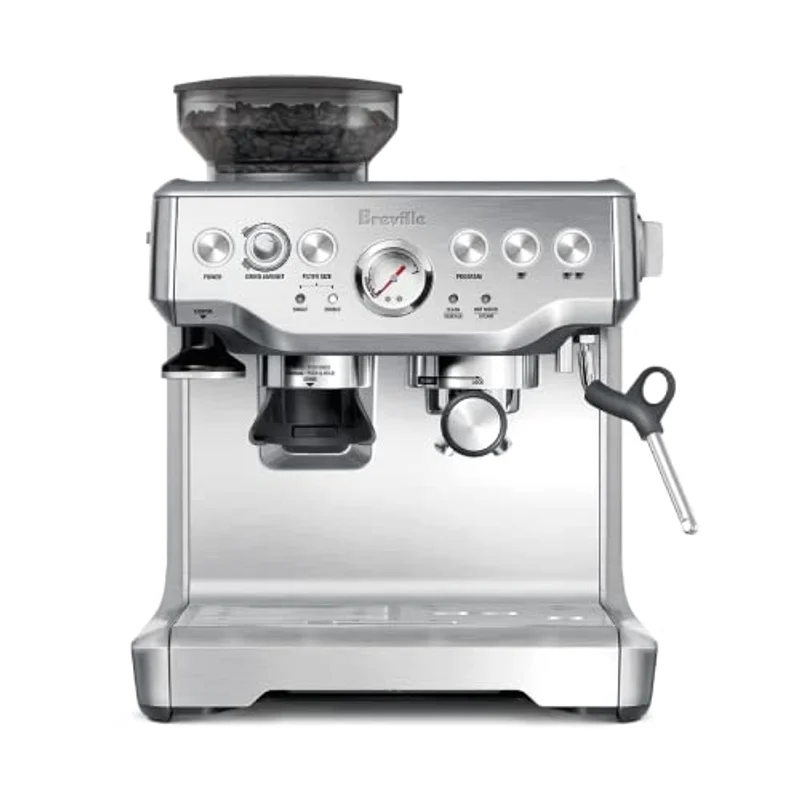
The most maintenance-complete machine here: a cleaning disc, cleaning tablets, a brush tool and a water filter with holder all ship with it. Expect the full weekly routine, plus filter changes.
Almost every home machine that dies young dies of one of three things: rancid coffee oil, cooked milk, or limescale. None takes more than a few minutes a week to prevent.
Some links here are affiliate links: if you buy through them we may earn a commission, at no extra cost to you. We name no cleaning products, because we have no verified data on them — use what your manufacturer specifies.
An espresso machine does something no other kitchen appliance does: push near-boiling water at roughly 9 bar through a bed of oily grounds, then blast steam through milk, several times a day, for years. Coffee oil coats the basket and the group. Milk protein and sugar bake onto hot metal. Tap water carries calcium and magnesium, and heat drops them out as a hard, insulating crust.
Neglect doesn't announce itself: there's no warning light for a group screen glazed with oxidized oil. Shots turn bitter and hollow, heat-up creeps from 30 seconds to two minutes, the pump whines, and one morning nothing comes out — by which point the repair estimate often approaches the price of a replacement.
One honest note, because it shapes everything below: we compare specifications, box contents and prices, we don't run a testing lab, and we don't publish ratings we can't verify. What follows is mechanism, plus the published features of the machines in our main espresso guide. Where your manual disagrees with us, your manual wins.
On this pageDaily · Weekly · Monthly · Descaling · Water · Symptoms · By machine · Calendar · FAQ
Do only this, plus a descale when the manual asks, and your machine will outlive most of its peers.
Run a two-second flush through the empty group before you lock in the portafilter, and again after you knock out the puck. The first stabilizes group temperature and rinses grounds off the screen; the second washes away the coffee mud the shot deposited.
Dump the puck while it's still a solid disc, then rinse the basket and wipe it dry. The reason is the perforations: the holes are tiny, and fines plus oil dry into them like grout. Half-blocked holes force water through the rest — a slow drift toward channeled, sour shots you'd otherwise blame on your grind while dialing in a shot.
Coffee oils oxidize in air, faster when kept warm — which is the inside of a group head. Rancid oil tastes bitter, and it sits in the path every drop of espresso travels through, so it re-contaminates each shot. That's the machine that "used to make better coffee."
The second you finish steaming, wipe the wand with a cloth kept only for that job, then open the steam valve briefly to blow out the milk drawn back into the tip. Now, not after you drink your coffee: milk proteins denature and sugars caramelize on hot brass, and within a minute or two the film becomes a hard lacquer water won't touch. Then the tip holes clog, which is the usual cause of a wand that "stopped steaming." Automatic wands like the Bambino's need the same treatment.
Empty and rinse the tray daily; it collects sugary milk and coffee water, and in a warm kitchen that smells within days. Then leave the portafilter out to dry: clamped in, it keeps the gasket compressed and hot around the clock, which hardens it faster.
Fifteen minutes, mostly soaking.
Pop the basket out and put both in hot water with a coffee-oil detergent — the alkaline powders sold for espresso gear, not dish soap. Twenty minutes, then brush and rinse thoroughly. Skip the dishwasher unless the manual allows it.
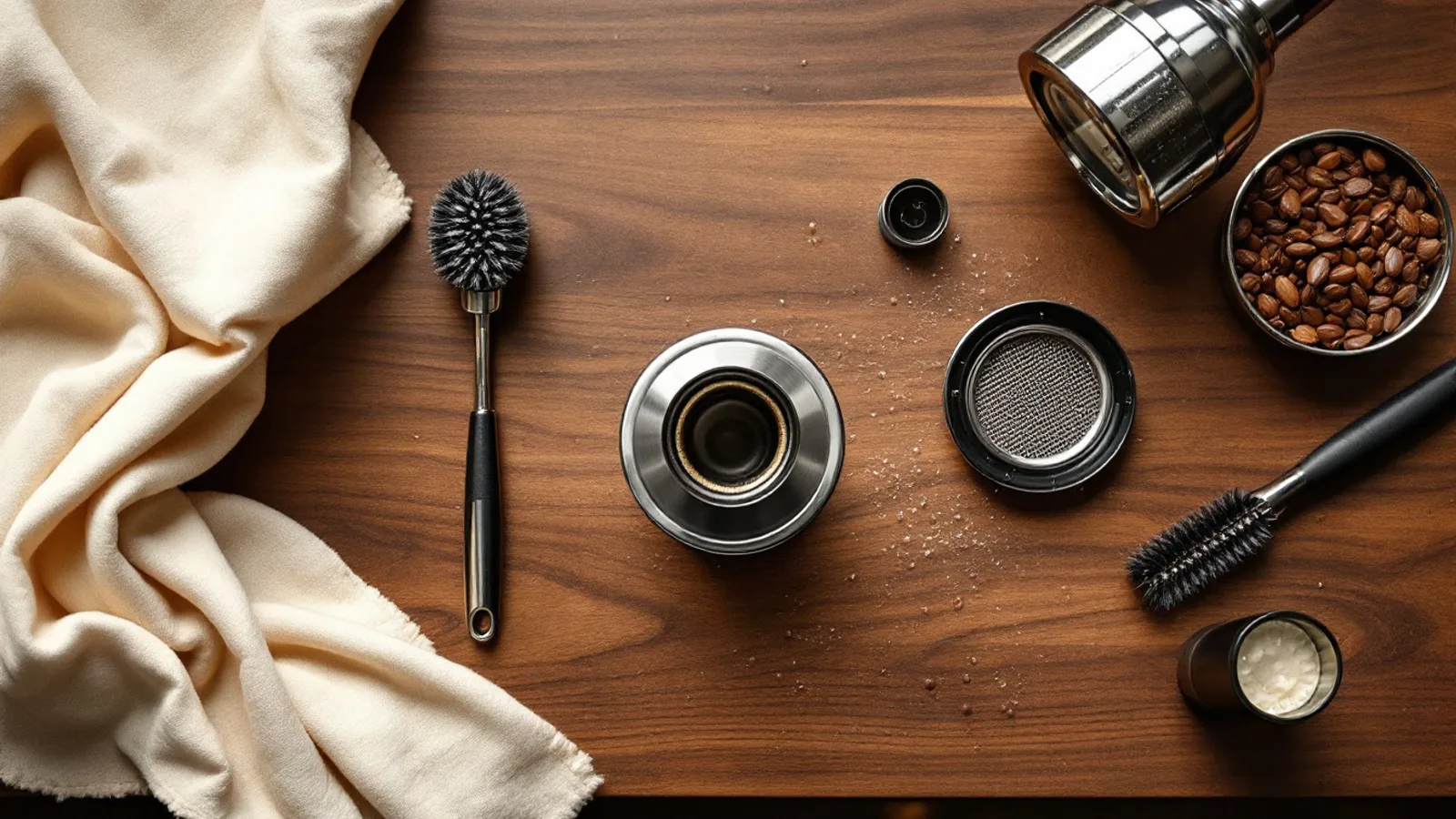
With the machine warm but not brewing, run a stiff nylon brush around the group gasket — the rubber ring the portafilter seals against — and across the shower screen. You'll dislodge a surprising amount of stale grounds packed into the gasket lip. If the manual says your screen is removable, soak it and hold it to a light to check the holes.
Backflushing is the most effective way to clean a group, and the most misunderstood. It needs a three-way solenoid valve — the part that dumps the pressure above the puck to the drip tray at the end of a shot, which is why machines that have one leave a dry puck. If yours has it, fit a blind disc (a holeless basket, also called a blank or cleaning disc), lock it in and run the pump: the water backs up through the screen and out the valve, carrying oils out of parts you can't reach. Add the manufacturer's tablet, then rinse with clean water.
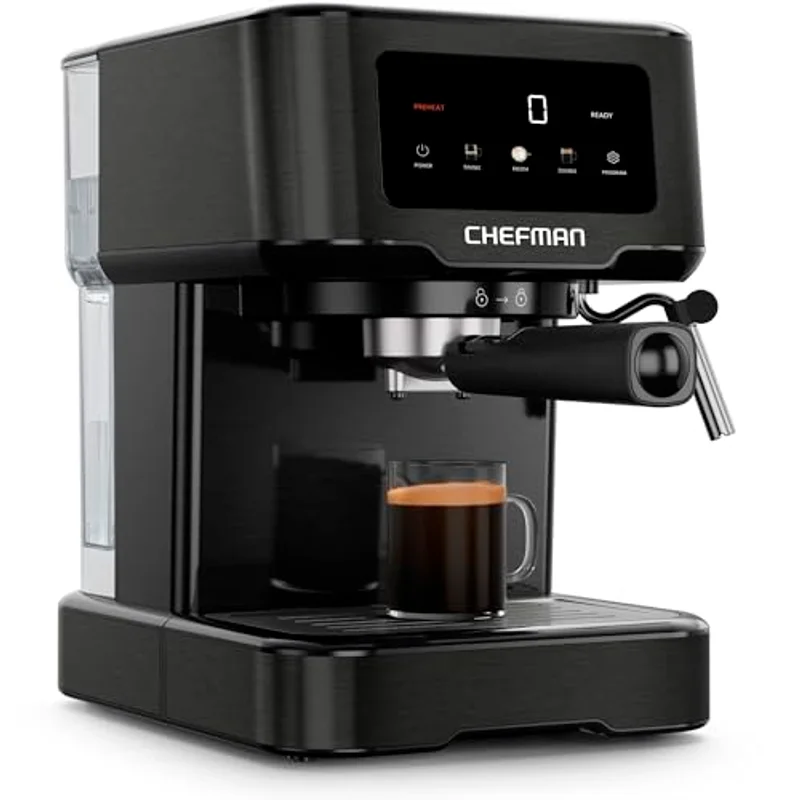
The part most guides skip: many entry machines can't be backflushed at all. With no three-way valve there's no drain path, so blocking the outlet only makes the pump strain against a dead end. The check is documentation, not price: look for "backflush" in the manual, or a blind disc in the box. The Breville Barista Express ships with a cleaning disc, cleaning tablets and a brush tool; sub-$150 machines like the Chefman CraftBrew list none of that, so assume manual cleaning. Those tiers are mapped in the machine-classes guide.
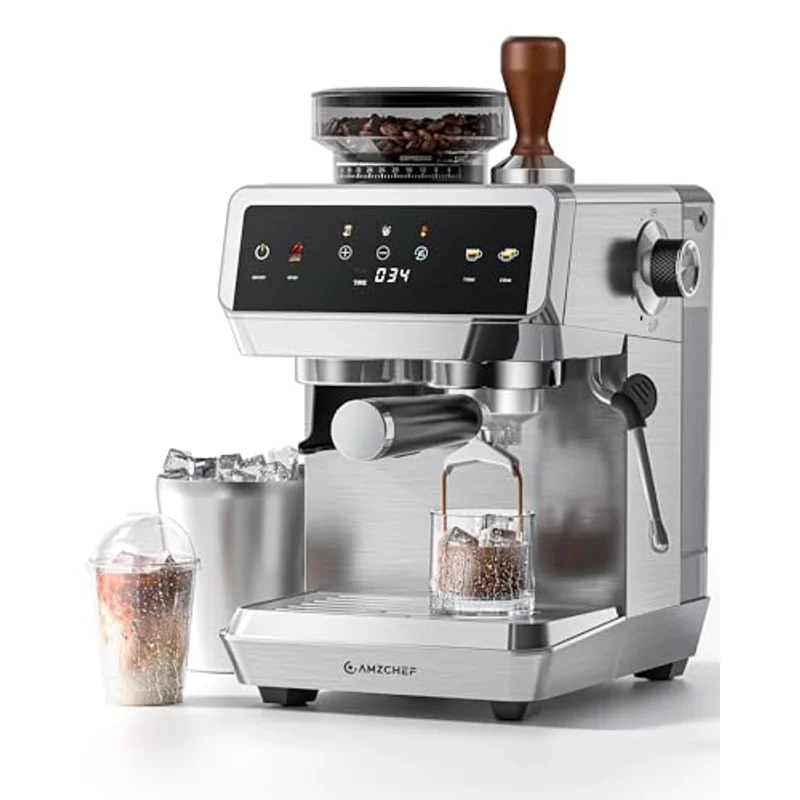
Empty the water tank, wash it with warm water and a little mild soap, rinse and air-dry. Standing water in a warm plastic reservoir grows biofilm — that faint slimy feel on the walls — behind most "tastes musty" mysteries. Removable tanks make it a thirty-second job: the AMZCHEF's 60 oz tank and the Chefman CraftBrew's 1.5 L reservoir both lift out.
Then empty the bean hopper and wipe it dry; bean oils leave a film that goes stale and taints fresh beans. The absolute rule on the grinding side: never put water inside a grinder. Water plus coffee dust sets hard around the burr carrier, and moisture on steel burrs invites rust. Dry brush only — on the AMZCHEF's 44-setting built-in unit or on a separate grinder.
Fines and oil collect in the burr chamber, and retained grounds get pushed into your next dose. Monthly suits a shot or two a day; sooner for dark, oily roasts. Empty the hopper, run the grinder briefly empty, then follow the manual to remove the upper burr and brush out the carrier and chute. Cleaning pellets are the low-effort option; never grind rice. Reassemble exactly as shown — alignment is what your grind settings are calibrated against.
The gasket is a rubber ring living permanently at brew temperature, and heat cycles harden it. Once hard it stops sealing, and the classic symptom appears: water sprays or dribbles from the portafilter edge mid-shot. The second tell is handle drift — you push the portafilter further around to get it tight. It's among the cheapest parts in the machine: inspect every few months, replace roughly annually under daily use.
Some machines ship with an in-tank filter — the Breville BES870XL includes a water filter with a holder. The media cuts chlorine taste and reduces some scale-forming minerals, and it exhausts on a volume schedule stated in tank-fills or months. An exhausted filter gives no warning: it looks identical and stops working. Most manuals say to remove it before descaling, since the solution strips the media.
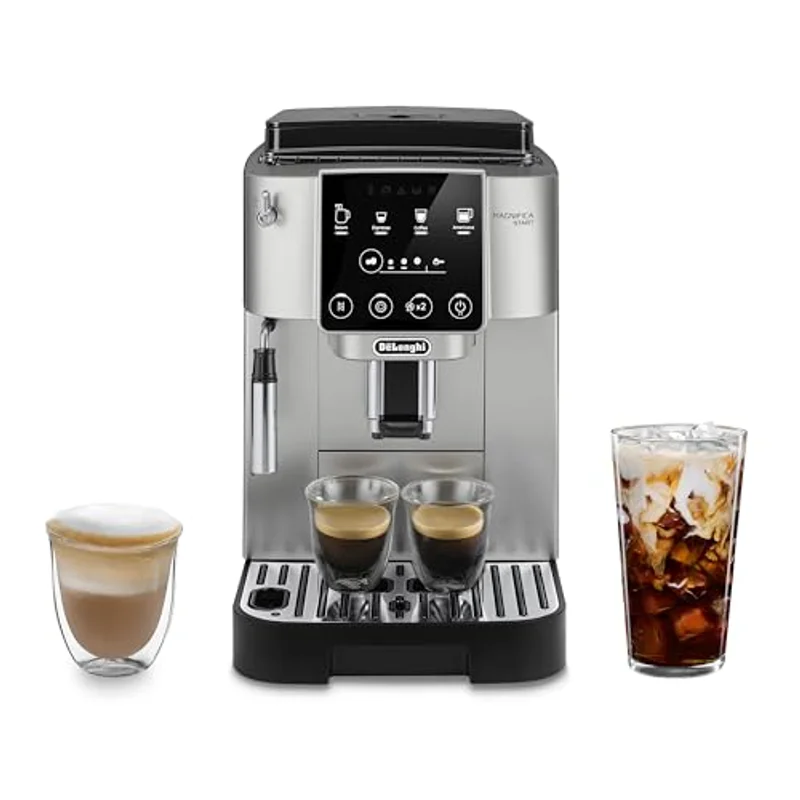
The list changes shape. On a super-automatic like the De'Longhi Magnifica Start, cleaning is mostly automated cycles plus emptying the used-puck container — it drops a compressed puck into a bin after every drink, and an overfull bin jams the brew unit. On a capsule machine like the Ninja CFN601 there's no group head at all: descaling on schedule, frother cleaning after milk, emptying the capsule bin.
Heat drives the calcium and magnesium dissolved in tap water out of solution, and they plate onto the hottest surfaces: the element, the boiler walls, the narrow passages of a thermoblock. That deposit is limescale — chalky, hard, a poor conductor of heat.
So heat-up gets longer and brew temperature less stable — and worse, the scale narrows the water path. Thermoblock machines, most machines under $700, heat water in thin channels with little room to lose. Flow drops, the pump strains, and eventually a passage blocks — a repair quote higher than a replacement, especially in the under-$200 tier. Scale is the main killer of home machines, and it's preventable.
Hardness is given in milligrams per liter as calcium carbonate: below about 60 is soft, 60–120 moderately hard, 120–180 hard, above that very hard. Your utility publishes the number, and cheap strips settle it for well water. Manufacturers commonly specify every three to six months on soft water, two to three months on moderately hard, monthly to six-weekly on hard — adjusted for volume. If your machine has a descale indicator, believe it: it counts volume, which beats memory.
We're deliberately not giving you a recipe. Dilution, dwell time and rinse count are matched to your machine's metals, seals and pump, and some warranties are conditional on an approved product. It's also why we'd avoid the vinegar recipes that dominate search results: acetic acid varies in strength, is harsher on some seals and on aluminum than the citric- and lactic-acid blends sold as descalers, and its smell survives in a boiler for weeks. If your manual doesn't name vinegar, don't improvise.
This confusion damages machines. Descaler is acidic and dissolves mineral scale; it goes in the tank and travels the water path, steam circuit included. Group detergent is alkaline and dissolves coffee oils; it goes in a blind disc or a soaking bowl. Detergent in the tank removes no scale, and acid in a backflush shifts no oil. Keep both, separately.
Descaling solution keeps reacting as long as it touches metal and rubber, and it doesn't distinguish limescale from your gaskets, brass fittings or aluminum boiler. Acid left inside can pit metal, harden seals early and sour the next dozen shots. Run every rinse tank the manual specifies, and dissolve powdered descaler completely — undissolved granules descale nothing and reach the pump as an abrasive.
Some machines run the cycle themselves: the AMZCHEF Espresso Machine with Grinder lists a descaling function, super-automatics like the De'Longhi Magnifica Start are built around the idea, and on the capsule Ninja CFN601 descaling is effectively the whole maintenance job. Without a program, the cycle takes roughly this shape — not a substitute for your manual.
On handling: descalers are acids — ventilate the kitchen, keep them off skin and eyes, don't lean over the outlet while hot liquid runs, and read the label with your manual.
Descaling removes scale; better water stops making it. Filtered or low-mineral bottled water puts less calcium and magnesium in, so less comes out on the element. If switching sources moves you from hard water to soft, and your interval scales with hardness the way most manuals do, expect to descale about half as often — assuming the same number of drinks a day. A basic pitcher filter is enough for most people; water from a salt-based softener isn't, since the sodium can be corrosive over time and tastes flat.
Zero-TDS water — distilled, or de-ionized — looks like the perfect answer and usually isn't. Many machines detect water level electrically, with a probe that relies on the water conducting a small current. Pure water conducts poorly, so the machine can read a full tank as empty, refuse to pump, or throw a fill error that looks like a fault and isn't.
Taste is the second reason: minerals help pull flavor compounds out of coffee, and brewing standards put the useful dissolved-solids range at roughly 75 to 150 mg/L. Water with nothing in it makes thin espresso. Filtered, not stripped.
Most complaints trace back to one of three residues. Start with the cheapest, most reversible cause.
| What you notice | Most likely cause | What to do first |
|---|---|---|
| Weak or slow flow, shots choking | Scale in the water path, or a basket and screen clogged with fines and oil | Soak and brush the basket and screen, flush empty. Still slow? Descale. |
| Heat-up takes longer than it used to | Scale insulating the element or thermoblock | Descale, then switch to filtered water. |
| Whining or straining pump | Working against a restriction — scale downstream, or an airlocked tank | Reseat the tank, purge to clear air, then descale. Whining after that means service. |
| Water leaking from the portafilter edge | Hardened or grounds-packed gasket losing its seal, or an overfilled basket | Brush the gasket; hard and shiny means replace it. Or try a lower dose. |
| Steam wand won't steam | Dried milk in the tip holes, scale in the steam circuit, or steaming before the boiler is ready | Cool it, soak and clear the tip, purge. Still weak? Descale the steam path. |
| Coffee tastes sour, bitter or musty | Rancid oil in the group, biofilm in the tank, or descaler not fully rinsed out | Do the full weekly clean plus a tank wash; rinse extra if you descaled recently. |
If a machine that used to make good espresso stopped, clean it before you change anything else. Compensating with grind buries the fault under a second variable, and you'll chase a shot that was never about the coffee.
Class determines the workload more than price does. Confirm live prices.

The most maintenance-complete machine here: a cleaning disc, cleaning tablets, a brush tool and a water filter with holder all ship with it. Expect the full weekly routine, plus filter changes.

The listed descaling function is a real convenience at this price: the machine sequences the cycle instead of leaving you to time it. The 60 oz tank lifts out for washing, which matters at that volume.

No cleaning disc or tablet in the box, so plan on manual cleaning: soak the two shot baskets, brush the screen, flush plain water. The 1.5 L reservoir lifts out to wash and to empty when the machine sits unused.

A super-automatic moves the work from technique to housekeeping: prompted automatic cycles, plus emptying the puck container before it jams the brew unit. No portafilter or screen to service, but a manual frother to wipe.

A capsule machine has the shortest list here. No group or basket to clean, so the job is descaling on schedule, cleaning the fold-away frother, and emptying the capsule bin.
One pattern is worth naming: the cheaper the machine, the more of the maintenance is manual and the smaller the repair budget that makes sense. A blocked thermoblock ends a sub-$100 machine; on a $650 machine it's a service visit — part of the math in whether a home machine is worth it.
Write the descale date on tape on the back of the machine. It's the only task with an interval long enough to forget.
| When | Time | What you do |
|---|---|---|
| After every shot | 30 sec | Purge the group, knock out the puck, rinse and dry the basket, wipe and purge the wand. |
| End of each day | 1–2 min | Empty the drip tray, wipe the machine, leave the portafilter out to dry, switch off. |
| Weekly | 15 min | Soak basket and portafilter in detergent and brush them. Brush the gasket and screen. Backflush with a blind disc only if your manual says so. Wash the tank. Dry-wipe hopper and chute. |
| Monthly | 20–30 min | Clean the grinder burrs dry. Soak the screen if removable. Inspect the gasket. On a super-automatic, run the prompted cycle and clean the brew unit. |
| Every 1–3 months (set by hardness) | 30–45 min | Descale with the manufacturer's product: monthly to six-weekly on hard water, two to three months on moderately hard, three to six on soft. Remove the filter first, finish every rinse tank. |
| Annually | 15 min | Replace the group gasket, replace a pitted screen, check the tank seal, re-read your manual's maintenance section. |
None of this is difficult, and none of it is optional. Two minutes a day and fifteen a week is the difference between replacing a machine in three years and still pulling clean shots in ten.
Water hardness sets the interval, not the calendar. Manufacturers commonly specify every three to six months on soft water (below about 60 mg/L as calcium carbonate), two to three months on moderately hard (60–120), and monthly to six-weekly on hard (above 120), adjusted upward for volume. Your manual's interval takes precedence, and a descale indicator beats memory because it counts volume.
Avoid it unless your manual names it for your model. Acetic acid varies in strength, is harsher on some seals and on aluminum than the citric- and lactic-acid blends sold as descalers, and its smell lingers. Use the product your manufacturer specifies, dissolve it fully, and finish every rinse cycle — acid left inside keeps attacking gaskets and metal.
No, and trying can do harm. Backflushing needs a three-way solenoid valve, the part that releases the pressure above the puck to the drip tray at the end of a shot. With it, a blind disc forces water back through the screen and out the drain, carrying coffee oils away. Without it there's no drain path and the pump strains against a dead end. Check your manual for "backflush" or for a blind disc in the box; many entry machines have neither.
No, on two counts. Many machines sense water level electrically, relying on the water to conduct a small current, so distilled water can make a full tank read as empty. And extraction needs minerals — brewing standards put the useful range at roughly 75 to 150 mg/L of dissolved solids — so zero-mineral water tastes thin. Use filtered or low-mineral bottled water.